Tear out, glue ups & cutting splines.

As much as I love the look of Walnut, it comes with a fair few issues to work through. Namely gouges and tear out during milling, and chunks coming loose when hand chiseling. I will have quite a few places to patch when it comes time to do a final sanding. I need to glue it all up first, then make a Walnut dust paste to patch all of the imperfections. I hope it doesn’t ruin the overall project.

I used packing tape on the outside mitered corners, and painter’s tape on the inside edges of each glue up. See fig 1. And fig 2.
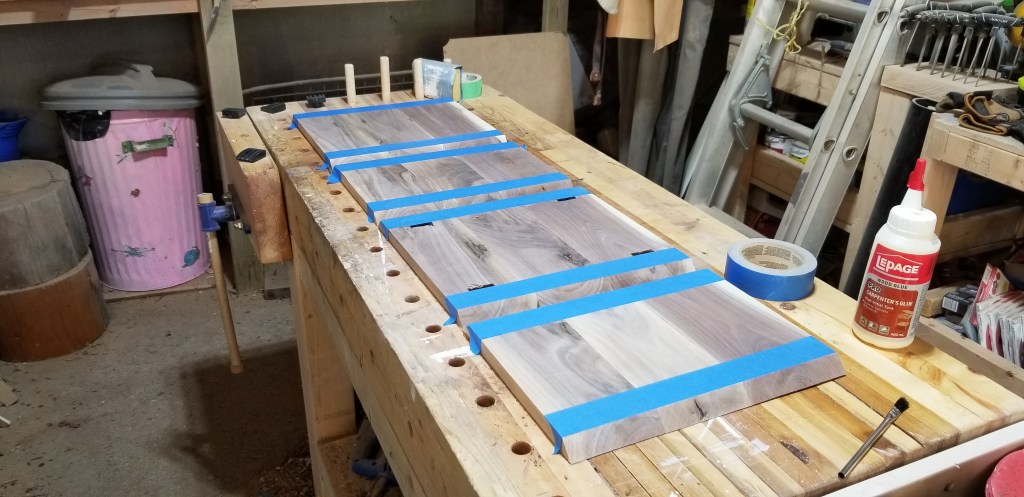
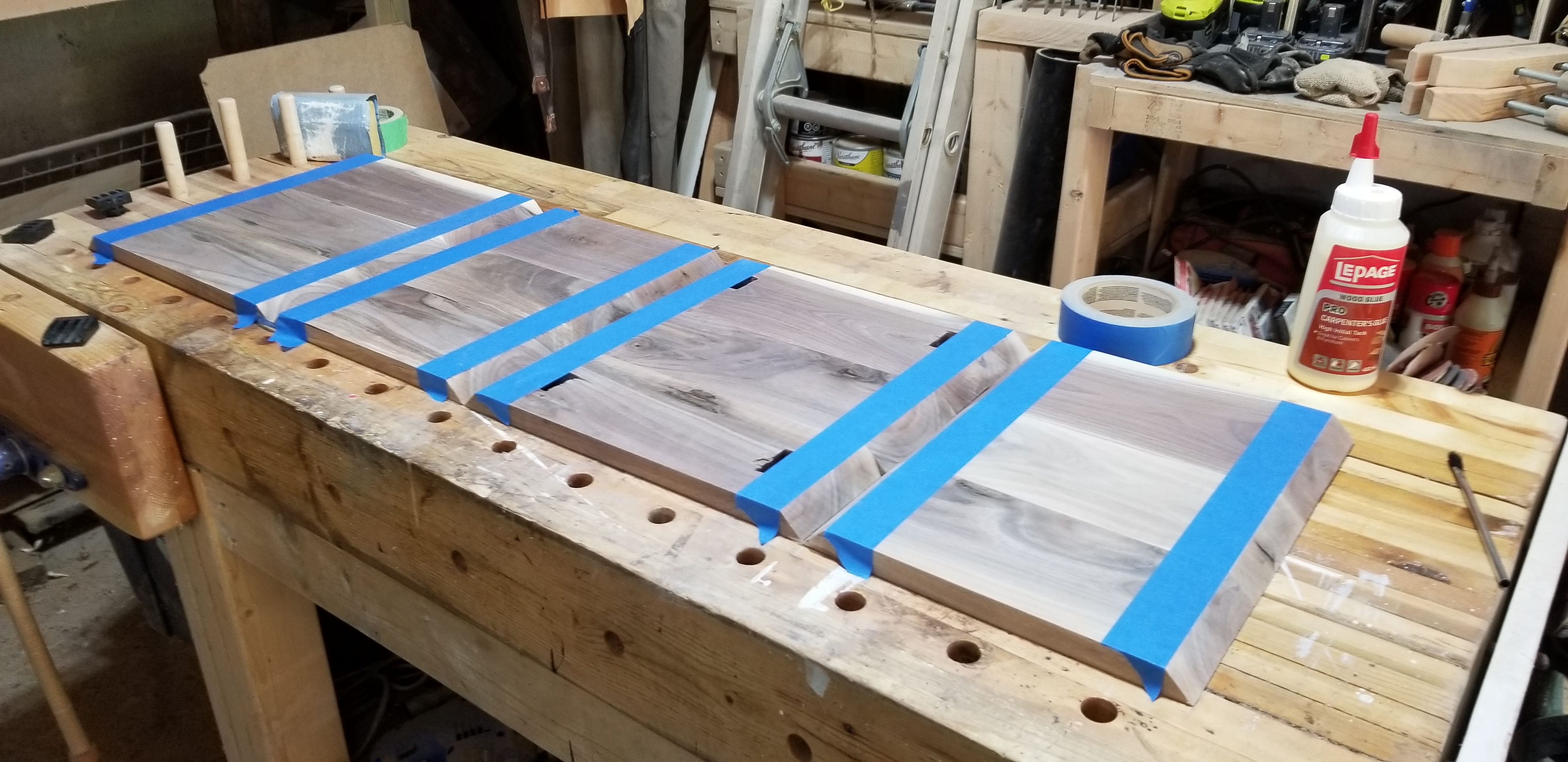
Fig 1. & fig 2.

I used a good amount of LePage glue in the joints, which I spread with an acid brush. I folded it all up into a box, and added additional painter’s tape to the final corner. I used two box clamps and a set square to keep the hollow Walnut box as square as I can get it. See fig 3. And fig 4.

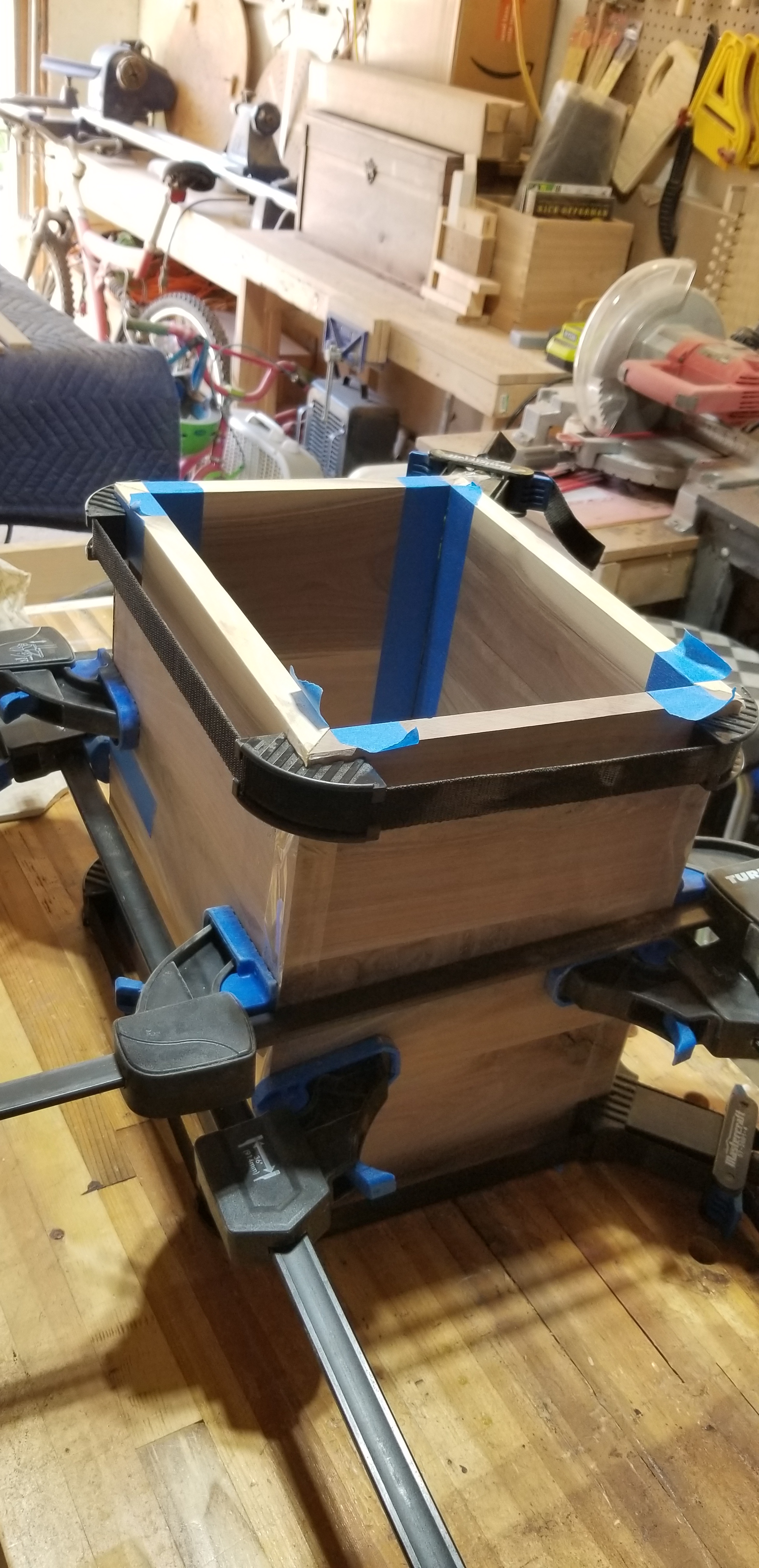
Fig 3. & fig 4.

I also clamped around the middle of the box to make sure it didn’t bulge or have the seams pop open or slide around.

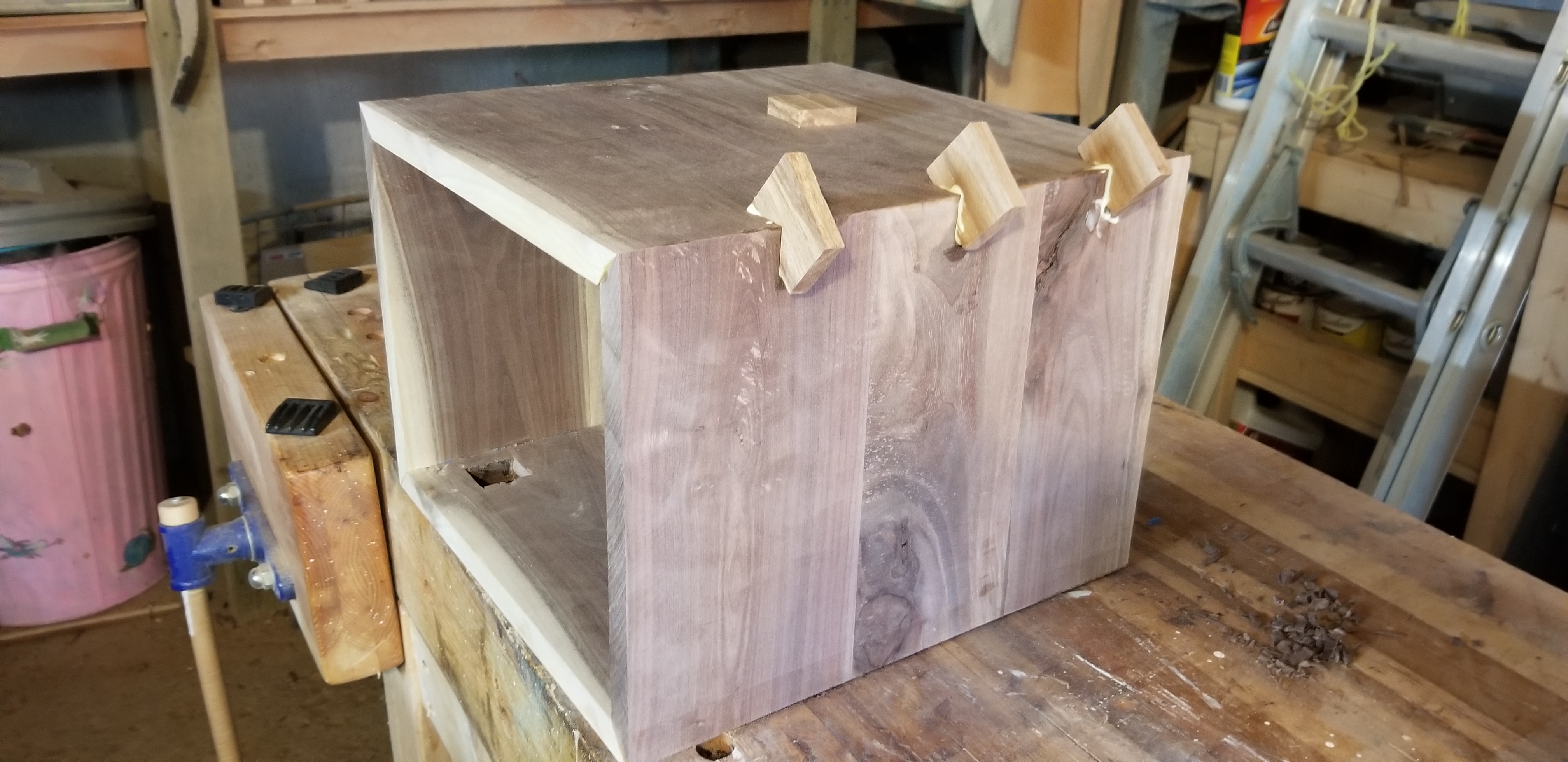
After the box had dried in the 27°C heat of the day for several hours I unclamped the hollow Walnut box and began to cut in my Hickory splines. I chose to do three per corner edge on the top. And depending on how the experience goes, I might add two more on both bottom edges too. I started with a Crown Dovetail saw, cutting just inside my marked lines, and then used a .25″ chisel, cutting along a 45° angle from both the top & bottom to remove the gap where my Hickory splines will rest. If you’re legit, you’d take note of grain orientations and how your boards were sawn, and grain patterns, but I’m just trying to get something done here. Two of the three had good pressure fits, but a possible gap situation might have occured from a too deep of a run with the Dovetail saw. More Walnut dust paste will be needed. See Fig 5 & fig 6.

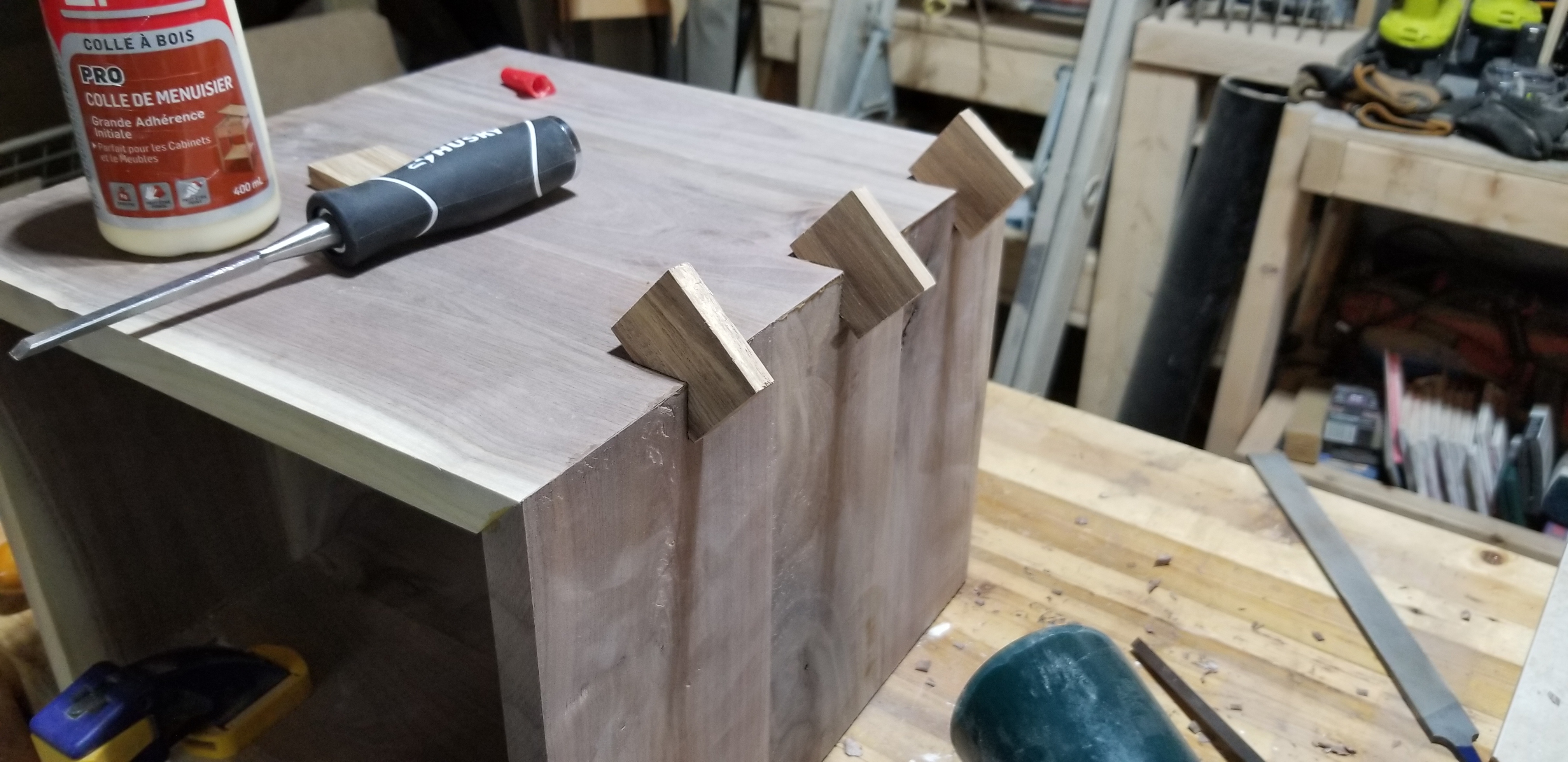
Fig 7 shows the glued in splines.

I only managed to cut in three splines on one side and glue them in yesterday evening. See fig 7. Once the top panel has three more glued in I can flush cut them off. I added them purely for visual interest and not for strength. Though, they may help in that respect.

I had managed to complete a dry fit test and have it all stand up on its own. I will take that as a win at this point. I know I have several hours of touch ups to do after the build up and assembly is done.
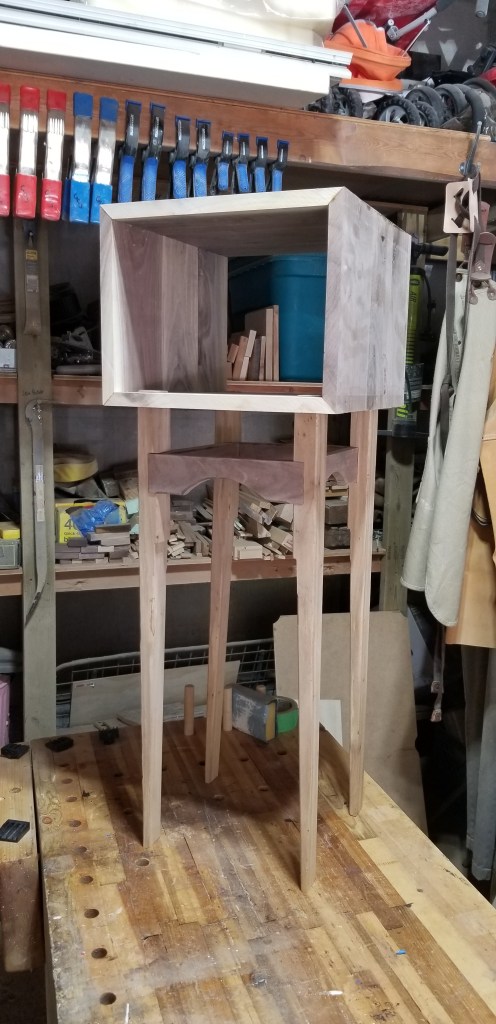
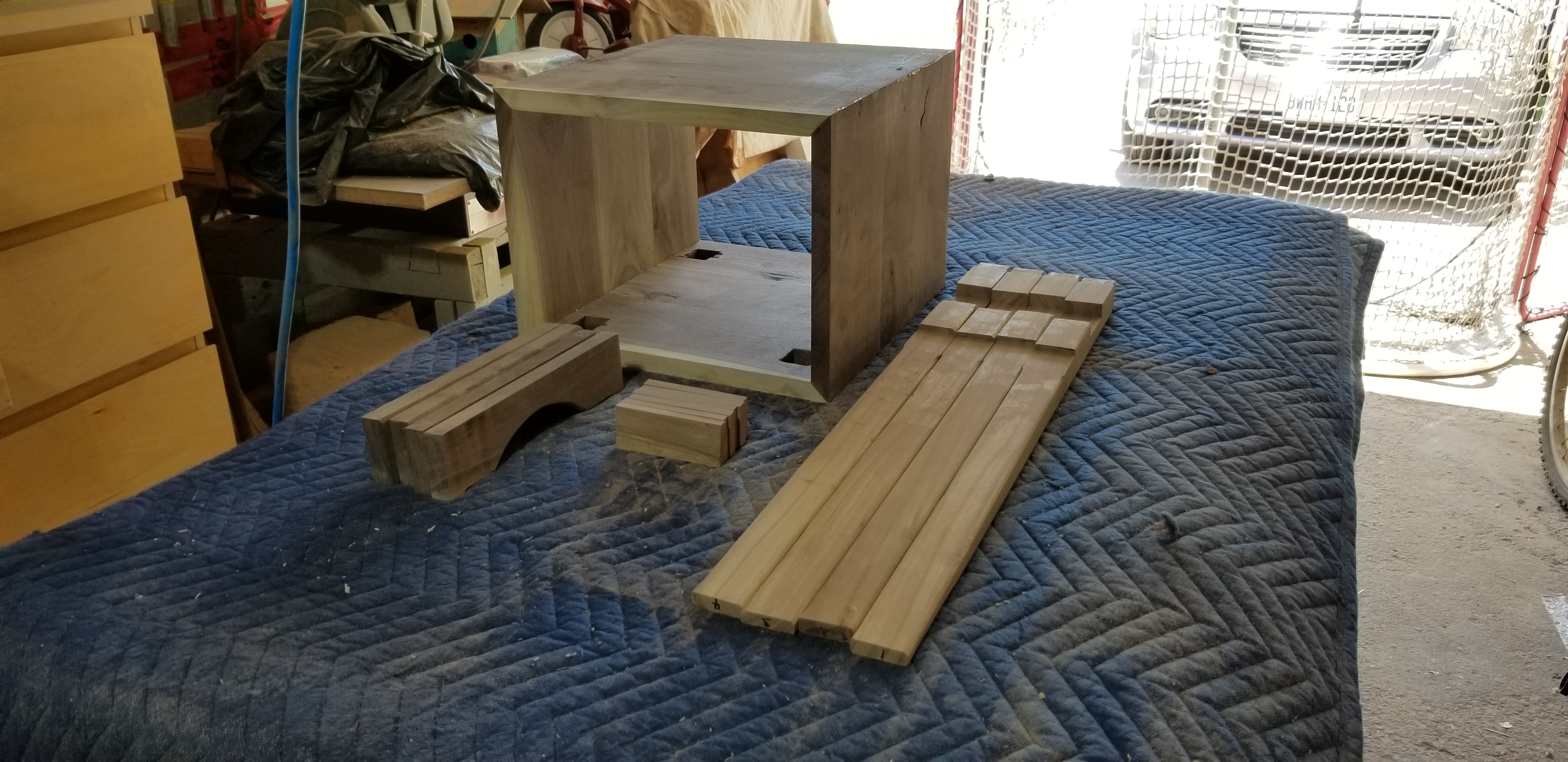
Parts layout. Still so much sanding left to do!

Once I complete the top portion I will shift focus back to the legs and skirting braces. Lots of sanding to do here. I think I will finish it off with some Danish Oil to tie the whole thing together. Ciao Bella!

The Coffee Table Build Episode.

The one that started out being about turning two book matched Hickory slabs into one monolithic water fall edged table, with a fat & chunky Ash leg on the opposite end. Then I pulled the slabs out from storage and the small one was perfect, and the show piece was cracked in three so badly it snapped in my hands. So new idea. A smaller coffee table using one live edge slab as the top, and the broken pieces of the other as the legs. Then I hated the live edge aspect, and cut it down into a more traditional rectangle. Chopped the Ash chunk into four legs, and decided it was a boring blob of a thing. So I cut skirting, and then I thought, what if I use a Dado to inset the skirting on the interior side of all four legs. After that I figured I should add a drawer that was shallow, and use the skirting to hold up and slide the drawer out, rather than metal drawer slides. Much cheaper option too. Then I thought, well the drawer is so shallow I could build a slatted shelf about 6″ up from the bottom of the legs. I looked at my available raw materials and saw I had to go front to back with six slats rather than across the width. I was hoping to make it look and feel longer by running the open slats across the longer axis, but materials dictated I go otherwise. Not angry. My last vestiges of doubt were on just doing a clear coat vs staining with Danish Oil with a Walnut Tint. I don’t like the bleached look of Ash, so tinted stain we go!  Now once all of this dries I will clear coat with a Varathane brand Diamond spray finish from a rattle can.

I did my glue up in stages to try to offset my amateur hand cut mortises. The tenons I did on the table saw, so I knew they were as good as I could get those. I hand chiseled out a few other odds and ends, but the bulk was done via circular saw on a track, and my Rigid 4512 Table saw. This was the first time I’ve ever used a bow tie to stop a crack. That took some doing, but I don’t hate the end result. I used a flush cut saw to trim off the bulk of the bow tie that sat proud of the table top. Finessed some other over hanging bits with the flush cut saw as well.

Come the fall, I would like to purchase either one long slab or two matching from the same species and actually try a waterfall edge coffee table. I opted for my electric hand planer, and manual hand planes to finish the top surface. I built a router jig out of angle iron to try to flatten the surface of my slabs, but I haven’t yet built the rails/ Saw horses it is meant to stack on top of. I have it ready for next time.

It’s not perfect by any way, shape or form, but I’m slowly getting better at whatever I’m playing at. Should look fine at the cottage or in the basement with my first ever coffee table build from years ago.